
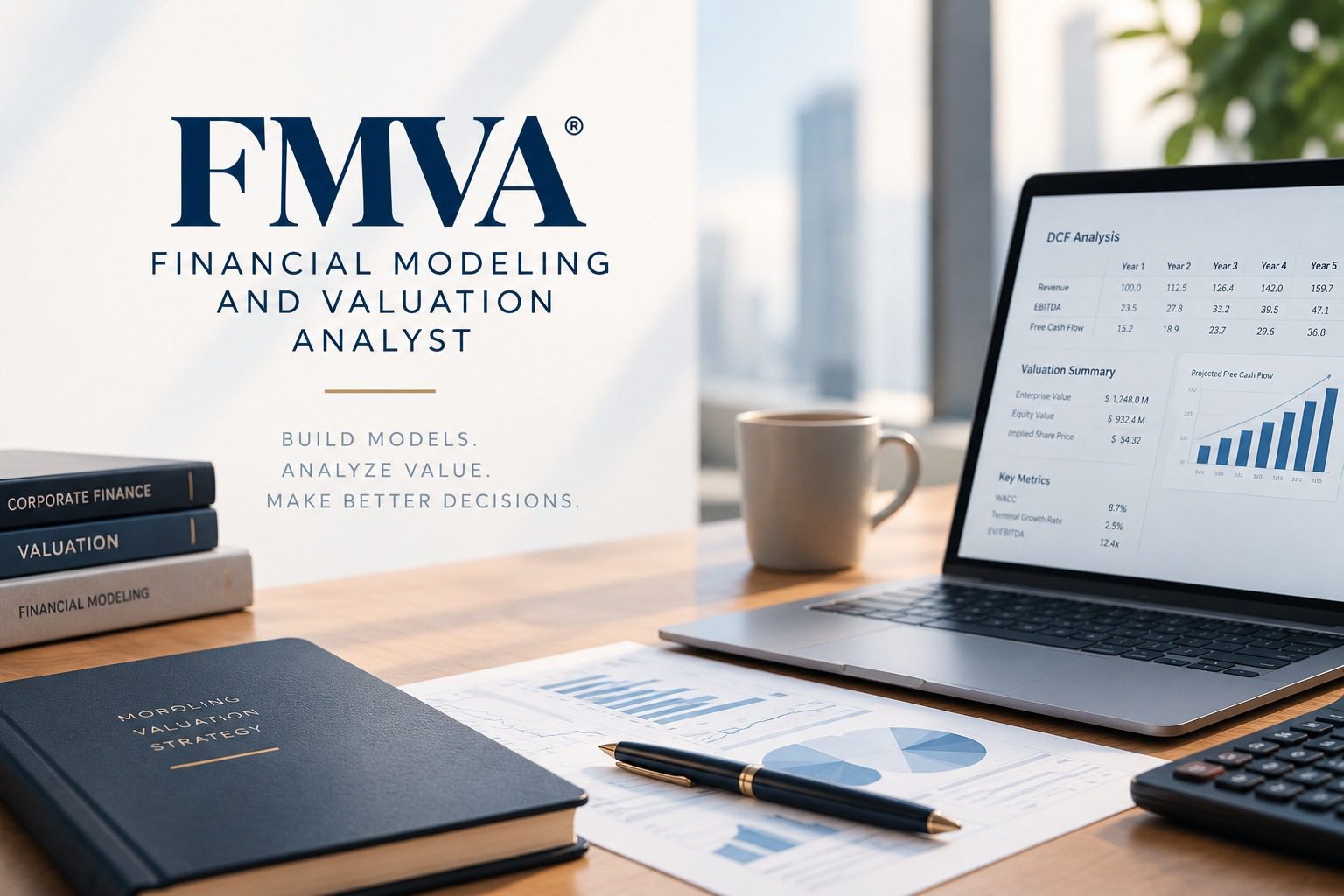
FINANCIAL MODELING AND VALUATION ANALYST (FMVA)

Available Dates & Locations

contact us

COURSE OVERVIEW

The Financial Modeling & Valuation Analyst (FMVA) program is CFI’s flagship certification, designed for aspiring financial analysts and finance professionals. It covers core skills in financial modeling, valuation, budgeting, forecasting, and advanced Excel. The curriculum starts with foundational three-statement modeling, then progresses to topics like business valuation, DCF, scenario analysis, and industry-specific modeling. Courses are hands-on, featuring Excel exercises and real-world case studies. The FMVA prepares you to build and analyze robust financial models, making it ideal for careers in corporate finance, investment banking, and FP&A.

COURSE OBJECTIVES

By attending this course, participants will be able to:

  • Construct comprehensive integrated three-statement financial models
  • Develop sophisticated operational forecasting models with key performance indicators
  • Apply multiple valuation methodologies including DCF, comparable company, and precedent transactions
  • Execute advanced scenario and sensitivity analysis for risk assessment
  • Build dynamic monthly cash flow models for liquidity management
  • Create detailed budgeting and forecasting frameworks for strategic planning
FINANCIAL MODELING AND VALUATION ANALYST (FMVA) — course overview

TARGET COMPETENCIES

  • Three-Statement Modeling
  • Operational Forecasting
  • Valuation Techniques
  • Scenario Analysis
  • Cash Flow Analysis

This course is designed for finance professionals seeking to advance their modeling and valuation capabilities, including:

  • Financial Analysts and Senior Financial Analysts in corporate finance
  • Investment Banking Associates and Vice Presidents
  • Equity Research Analysts and Portfolio Managers
  • Corporate Development Professionals and M&A Specialists
  • Private Equity and Venture Capital Analysts
  • Consultants specializing in financial advisory services

Interactive workshops combining theoretical concepts with hands-on Excel modeling exercises, real-world case studies, and practical applications using industry-standard templates and methodologies.

NOTE IMPORTANT CERTIFICATION NOTES: One-year online access to course materials and assessment subject to fees. The fees cover sitting for the final exam. Candidates who do not pass must wait thirty days before retaking the exam. three- hours exam with 50 randomized multiple-choice questions, including Excel modeling case studies. Delegates will sit for the exam at the end of the course. This course requires laptop.

3-STATEMENT MODELING

  • Integrated Model Framework
    • Building dynamic income statement projections
    • Constructing balance sheet forecasting models
    • Linking cash flow statements seamlessly
  • Advanced Model Architecture
    • Creating flexible assumption drivers and scenarios
    • Implementing circular references and iterative calculations

OPERATIONAL MODELING

  • Revenue and Cost Modeling
    • Developing unit economics and pricing models
    • Building capacity utilization and operational efficiency metrics
    • Forecasting working capital and inventory dynamics
    • Creating headcount and compensation planning models

VALUATION MODELING

  • Discounted Cash Flow Models
    • Building unlevered and levered DCF models
    • Calculating weighted average cost of capital
    • Implementing terminal value calculations
  • Relative Valuation Methods
    • Comparable company analysis and multiples selection
    • Precedent transaction analysis methodologies

SCENARIO AND SENSITIVITY ANALYSIS

  • Risk Assessment Modeling
    • Building base, upside, and downside scenarios
    • Implementing data tables for sensitivity analysis
  • Advanced Analytics Tools
    • Developing probability-weighted scenario outcomes
    • Building stress testing frameworks

MONTHLY CASH FLOW MODELING

  • Liquidity Management Systems
    • Constructing detailed monthly cash flow forecasts
    • Building working capital and seasonal adjustments
    • Implementing debt service coverage calculations
    • Creating cash flow timing and collection models

BUDGETING AND FORECASTING

  • Strategic Planning Models
    • Building rolling forecasts and budget variance analysis
    • Creating capital expenditure and depreciation schedules
  • Performance Monitoring Frameworks
    • Developing key performance indicator dashboards
    • Implementing actual versus budget tracking systems
    • Creating management reporting and presentation templates

Back to top
0
    0
    Your Cart
    Your cart is emptyReturn to Courses